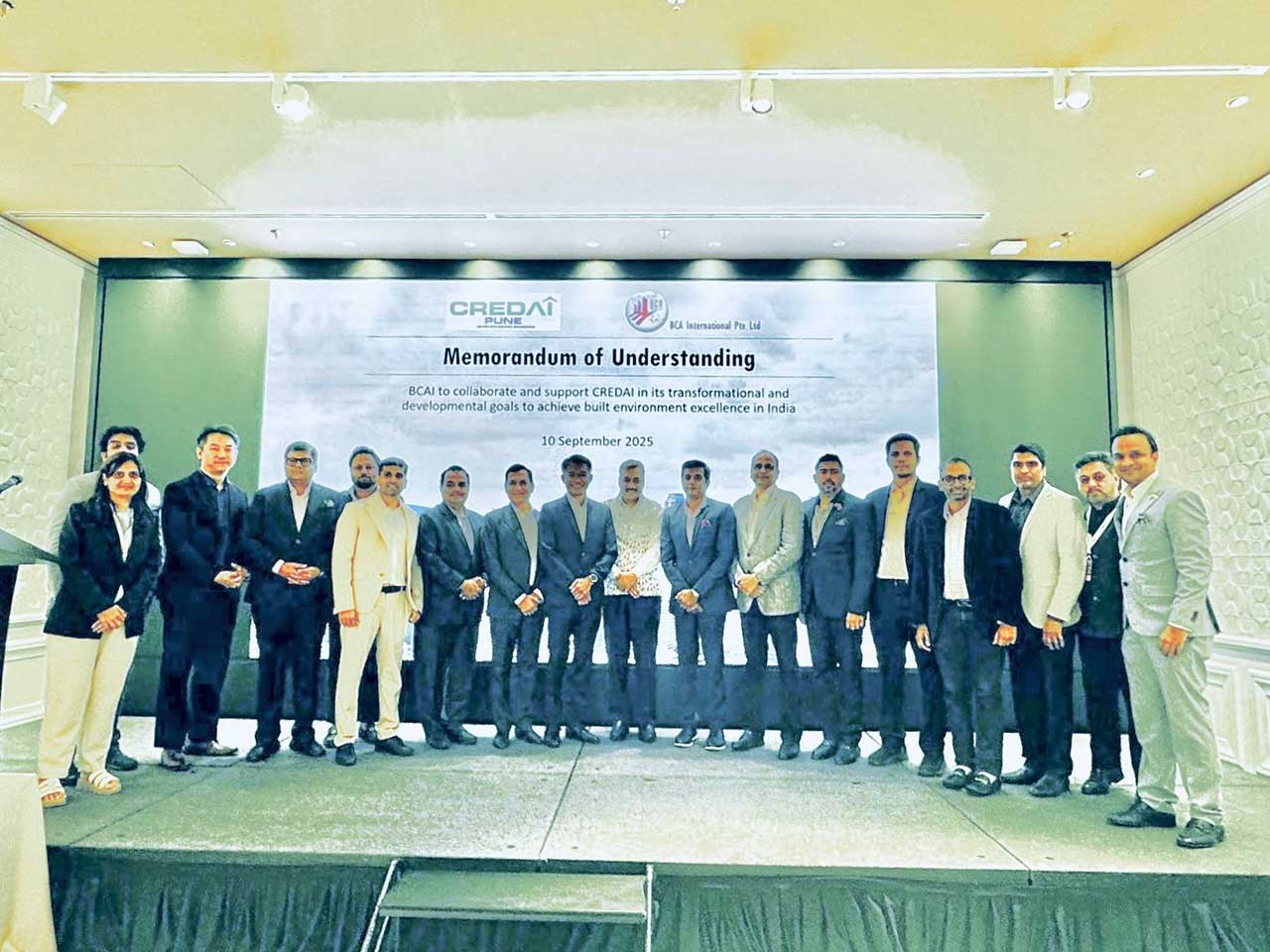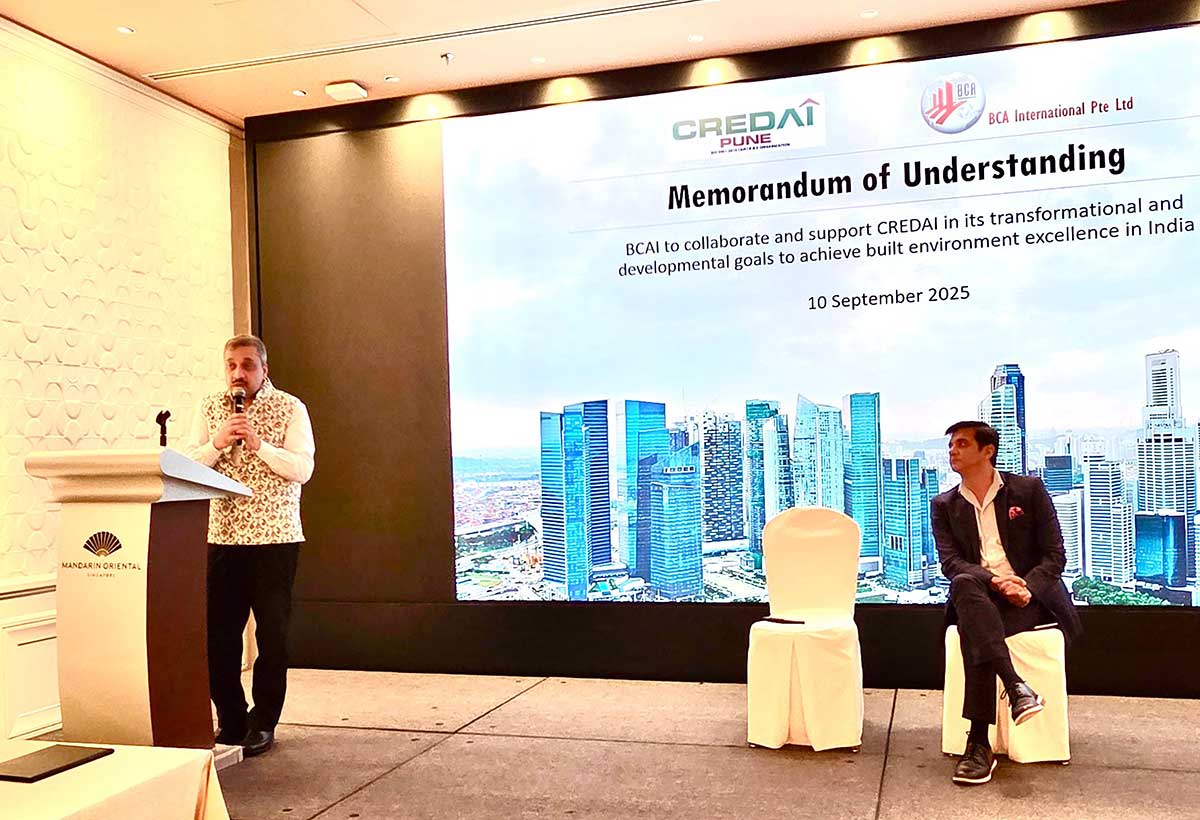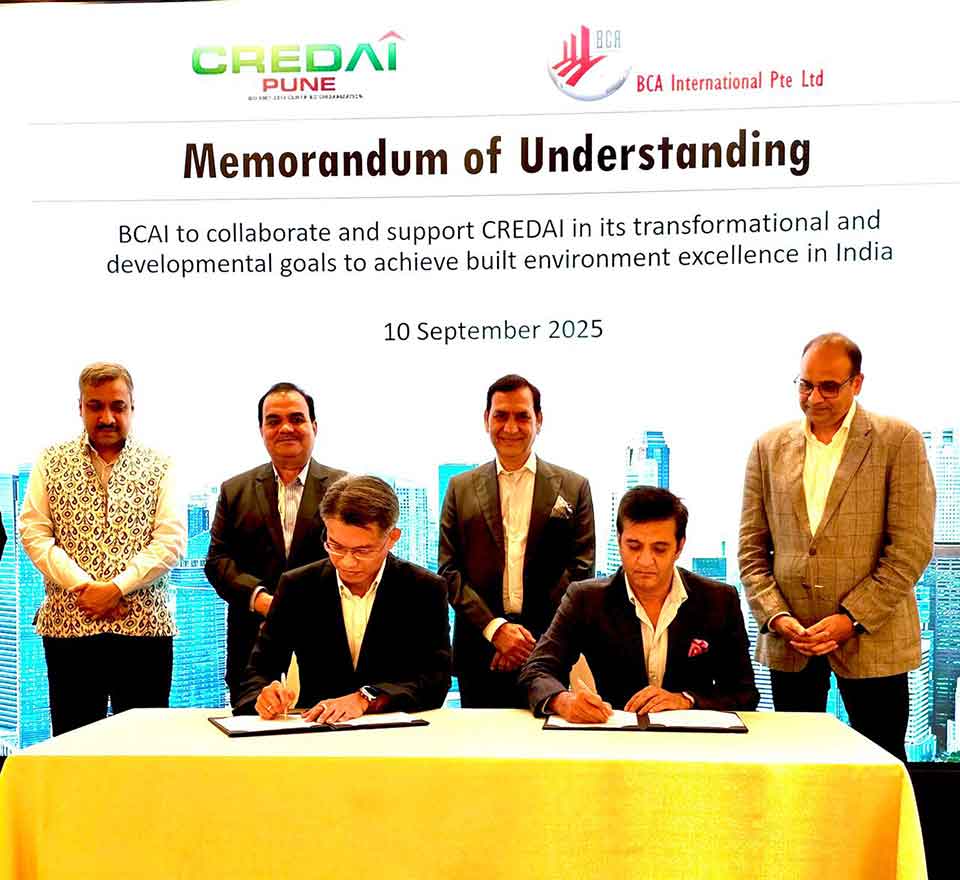
Credai Pune International Business Forum (CIBF) to Singapore – Sept. 2025
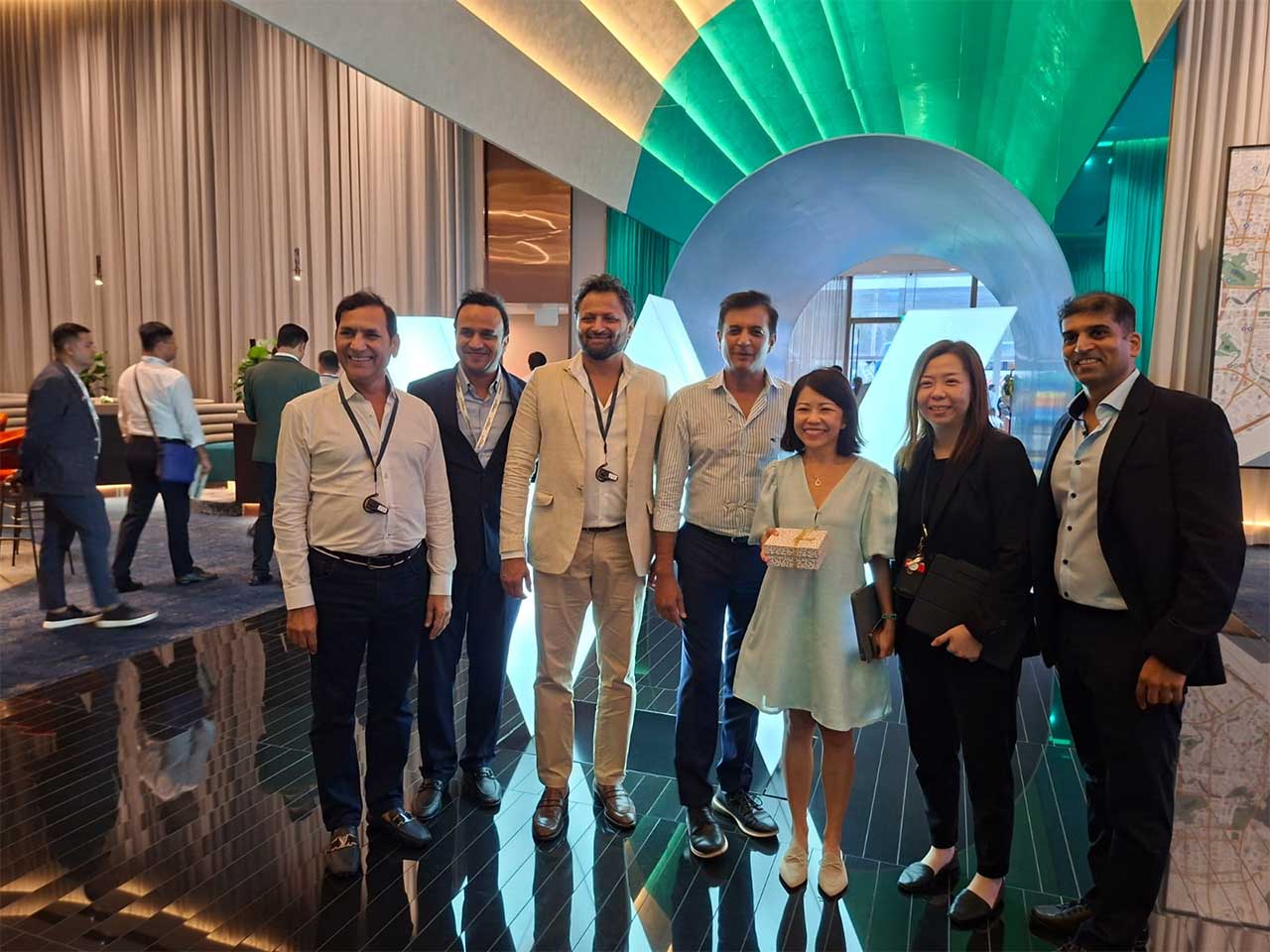
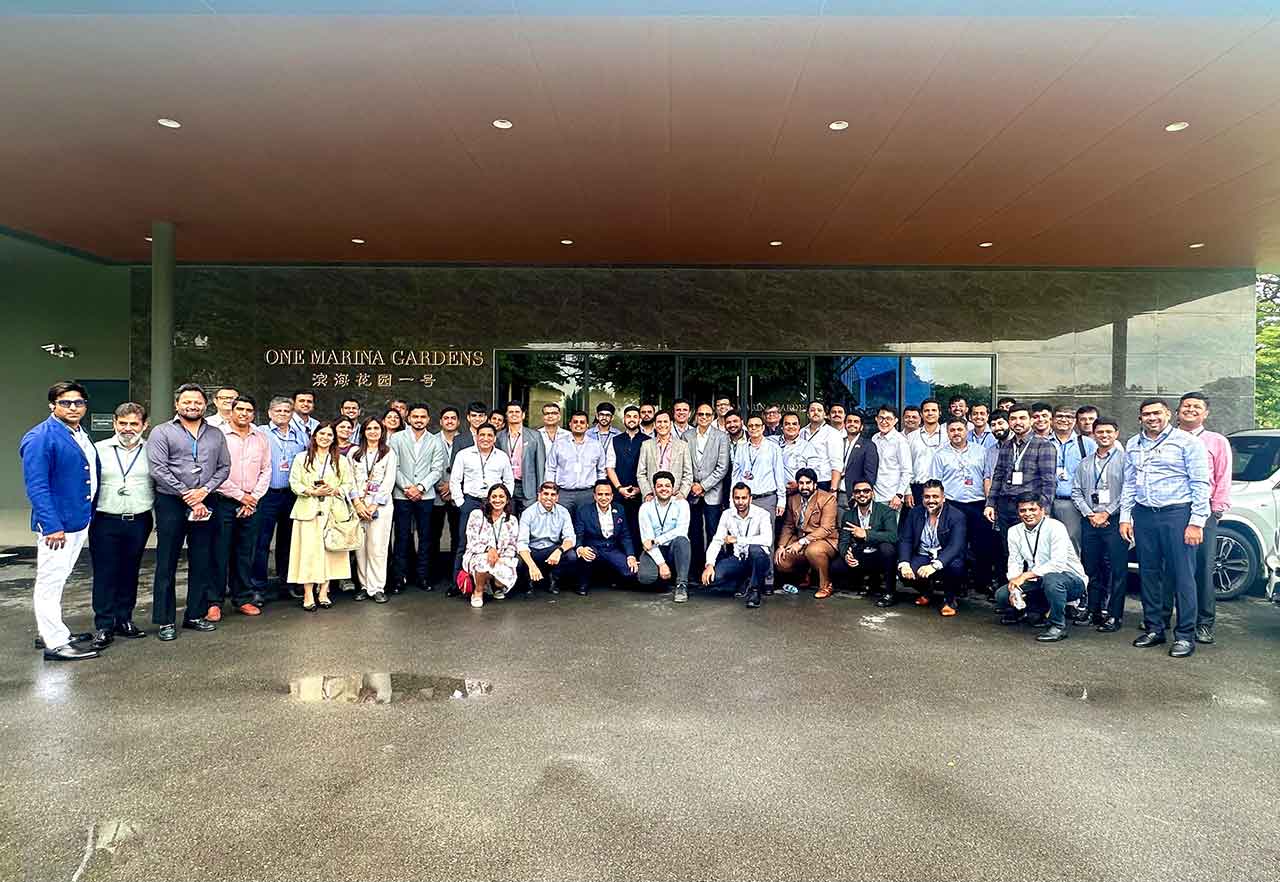
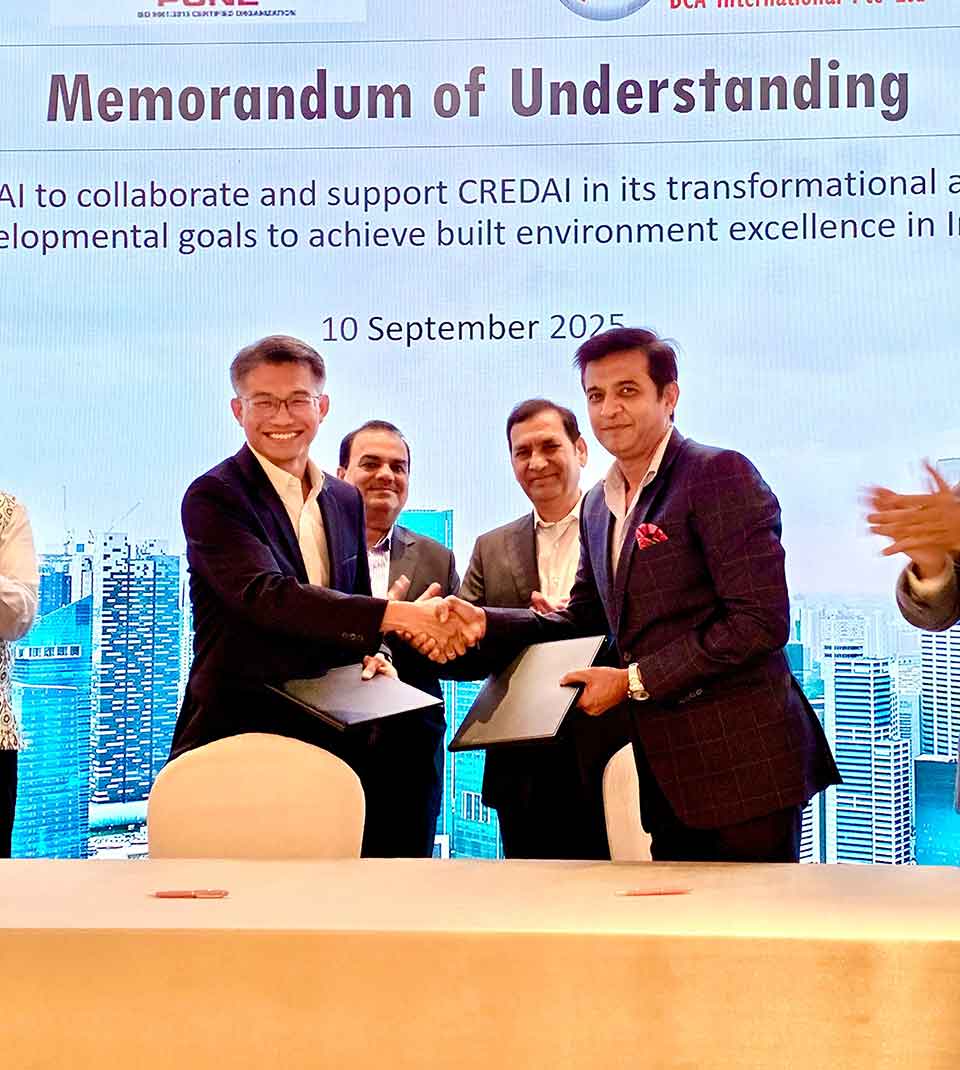
A dynamic delegation representing Credai Pune Metro’s leading developers undertook a landmark study tour to Singapore in September 2025. This International Business Forum was structured to provide an in-depth understanding of Singapore’s globally acclaimed advancements in sustainable urban development, architectural excellence, digital construction technologies, and the design of vibrant mixed-use communities. Spanning luxury residential, affordable housing, green innovations, and tech-driven construction, the tour fostered direct learning through curated visits, interactive sessions with thought leaders, and firsthand experience of Singapore’s iconic built environment.
Site Visits and Key Learnings
1. ParkTown Residences – Residential Master Planning and Amenity Design (P&T Consultants)
The tour began at ParkTown, a flagship residential housing project by P&T Consultants, known for its holistic landscape-driven master planning and innovative amenity zoning. The delegation explored :
- Experiential Sales Office : State-of-the-art sales and experience gallery, where digital presentations, immersive walkthroughs, and mockup units effectively convey the project’s lifestyle vision to prospective buyers.
- Amenity Diversity : Over 50 curated amenities spread across Park West and Park East, including hydrotherapy pools, forest jogging trails (600m), thematic gardens, sun lounges, adventure oases, dining and lifestyle pavilions, kids’ entertainment areas, and dedicated fitness, co-working, and relaxation spaces.
- Recreational Floor Zoning : The project demonstrated effective separation and integration of activity zones, allowing residents of all ages and interests to enjoy vibrant, safe, and relaxing environments.
Takeaway for CREDAI Pune :
The blend of communal, recreational, and wellness-focused spaces in high-density housing was noted as a model for creating liveable, community-oriented projects in India’s urban centers.
2. One Marina – High-End Residential Sales Gallery & Customer Experience
At One Marina, the delegation was introduced to :
- Cutting-Edge Sales Gallery : Live demonstration of advanced sales tools like VR walkthroughs, digital floor plan selectors, and ambiance-controlled show units, providing an immersive buyer experience.
- Multi-Recreational Floor Zoning : Insight into how vertical and horizontal recreational zones can be layered in a luxury context to maximize value for residents.
- Experience Centre Design : Strategies for integrating art, culture, and lifestyle elements within the sales journey.
Takeaway for CREDAI Pune : The use of advanced customer engagement and experiential technology in project marketing can significantly elevate sales conversion and create deeper emotional connections for buyers.
3. Capita Spring (CapitaLand Developers) – Vertical Mixed-Use & Public Realms
A highlight of the tour, CapitaSpring is an iconic mixed-use development featuring:
- Hybrid RCC-Steel Structure : Examining the methodology used to create high-rise towers blending commercial, residential, F&B, and community uses.
- Public Access Sky Gardens : Two spectacular sky gardens at levels 17 and 51, acting as urban lungs and public spaces offering panoramic city views amidst lush greenery.
- Innovative Recreational Floor Concepts : Recreation zones distributed vertically, integrating wellness, leisure, and social interaction within a vertical urban context.
- Hawker Centre Integration : A reimagined food court model, blending Singapore’s traditional hawker culture into the skyscraper’s public realms.
Takeaway for CREDAI Pune:
Vertical landscaping and public sky parks serve as a model for how dense urban projects in Indian cities can offer respite, promote sustainability, and engage communities.
4. Kampung Admiralty – HDB’s Senior Living Vertical Community
A tour of Kampung Admiralty showcased:
- Vertical Integration of Senior Living :
- Co-location of senior housing, a medical centre, childcare, urban farming, retail, food court, and a community plaza within a single, eco-friendly vertical complex.
- 140% Green Space on Plot Area :
- Achieved through terraces, sky gardens, urban farming decks ("grow your vegetables" concept).
- Focus on Life-Cycle Ecosystem :
- The project embodies a self-sustaining ecosystem with active public spaces supporting inter-generational living and social coherence.
Takeaway for CREDAI Pune :
The delegation was inspired by how high-density affordable housing can foster both independent and community-supported aging, while maximizing green areas and public wellness.
5. Punggol Digital District & Biophilic Town Planning. The tour to Punggol Digital District revealed :
- District-wide Digital Twin Modeling : Mapping every building, park and street for real-time centralized management (“district brain” concept) and enhanced public-private space blending.
- Timber Hybrid Buildings, Biophilic Framework : Exposure to timber-concrete hybrid construction, extensive ecological landscapes, and comfort-driven urban design principles.
- Habitat, Biodiversity, and Wellbeing : Emphasis on biodiversity corridors, eco-connectivity, and outdoor spaces to increase residents’ quality of life and sense of place.
Takeaway for CREDAI Pune : The highly integrated digital and green infrastructure was seen as a future paradigm for new townships or urban districts in India.
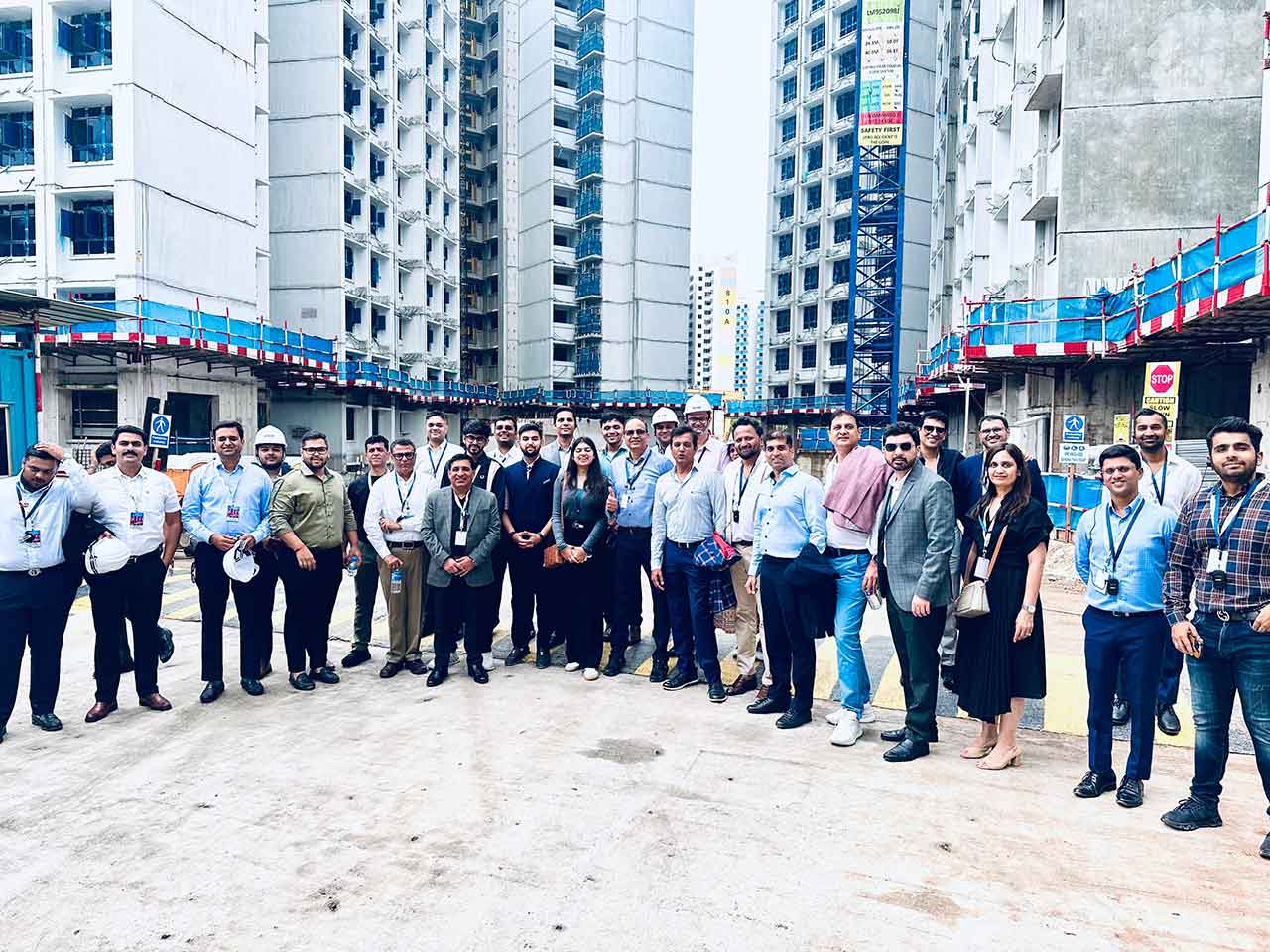
6. Keat Hong Grange – Prefabricated Prefinished Volumetric Construction (PPVC) . The delegation studied this HDB residential project as a showcase of :
- Industrialized Modular Construction : Room-sized, prefinished modules are manufactured offsite, then transported and assembled rapidly onsite, akin to stacking Lego blocks.
- Minimal On-Site Wet Work : Quality and speed improvements thanks to factory-finished flooring, partitions, MEP works, and window units.
- Collaboration with Design Architects : Insight into value engineering, quality assurance, and the seamless integration of architectural vision and modular technology.
Takeaway for CREDAI Pune : The team noted the potential for scaling PPVC in Indian affordable and mid-segment housing, offering economies of scale & higher precision with reduced construction time.
7. Boulevard 88 Residences – Luxury Branded Integration. Here, delegates observed :
Mixed-Use Mariott Branded Residence : Integration of residential and hotel amenities through a common landscaped podium, offering a seamless luxury experience.
- Landscape Design by Safdie Architects : Spacious plazas and recreational decks create a unified yet distinct identity for each building component.
- USPs of Branded Residences : Strong focus on property value enhancement via hospitality-backed standards and service integration.
Takeaway for CREDAI Pune : The concept of branded residences and integrated luxury amenity hubs sets a strong precedent for upcoming Indian residential developments targeting urban elites.
8. Keppel South Central – Commercial Grade A Space Innovation. At this commercial hub, learnings included :
- Heat Gain Reduction via Smart Fenestration : Advanced glazing, façade design, and shading strategies to lower cooling loads and create more sustainable workplaces.
- Support Space Innovation : Next-level comfort and user-oriented recreational floor layouts, as well as thoughtful zoning and lounges for work-life balance.
Takeaway for CREDAI Pune : Significant opportunities exist to adopt similar passive design and recreational zoning approaches in India’s commercial and mixed-use portfolios.
9. Marina One (Ingenhoven Architects) – The Green Heart, Microclimate Design. The delegation explored :
- Courtyard-Driven Microclimate Regulation : Large internal courtyards & atriums that cool air, reduce heat gain and enhance comfort through careful climate-responsive landscape planning.
- “Green Heart” Ecological Core : Dense tropical planting and water features create a lush, biodiverse urban oasis in the heart of Singapore’s CBD.
Takeaway for CREDAI Pune : Biophilic design principles can radically improve microclimate, environmental performance, and visual comfort, even in dense city centers.
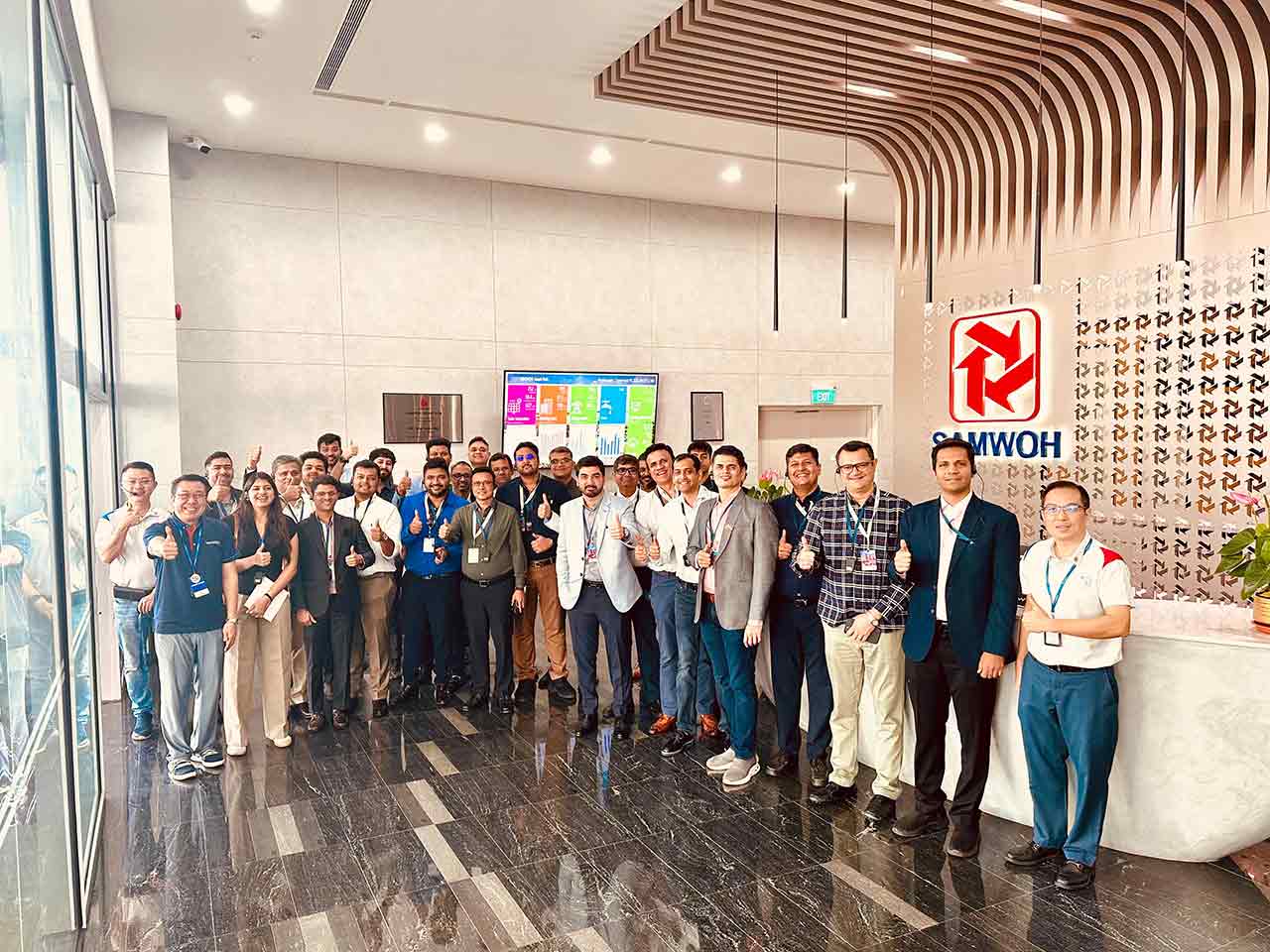
10. Samwoh Research & Development Centre & BCA Braddell Campus – Materials Innovation and Net Positive Energy Buildings. Visits to these research loci covered :
- Net Positive Energy and Super-Low Energy Buildings : First hand exposure to operational net-positive energy buildings, use of timber hybrids, ambitious low-carbon standards, and building ‘living labs’ that trial new sustainable technologies.
- Incubation & Start-Ups Support : Direct interaction with teams fostering new material R&D and pilot programs for AI, safety, and real-time data monitoring.
- Smart Construction Analytics : Introduction to start-ups like Concrete AI (real-time monitoring), Ailityics (AI-based safety cameras), Podium (feasibility-platform with instant massing options), and Wavescan (advanced leak detection).
Takeaway for CREDAI Pune : The strategic support for innovation, rapid prototyping, and data-driven construction management can serve as an inspirational roadmap for India’s growing smart infrastructure ecosystem.
11. Mapletree Business Park & Larger Scale Landscape Integration. The tour showcased :
- Integrated Business Parks : Demonstrated benefits of linking commercial spaces with green corridors, gardens, and public recreational facilities for employee wellbeing and urban vitality
12. Signature Interactions and Collaborations. The study tour also enabled engaging discussions with :
- Leading international architects (e.g., Safdie Architects, WOHA, DP Architects, Heatherwick Studio, Ingenhoven Architects)
- Key governmental and private sector stakeholders
- Start-up founders in construction technology
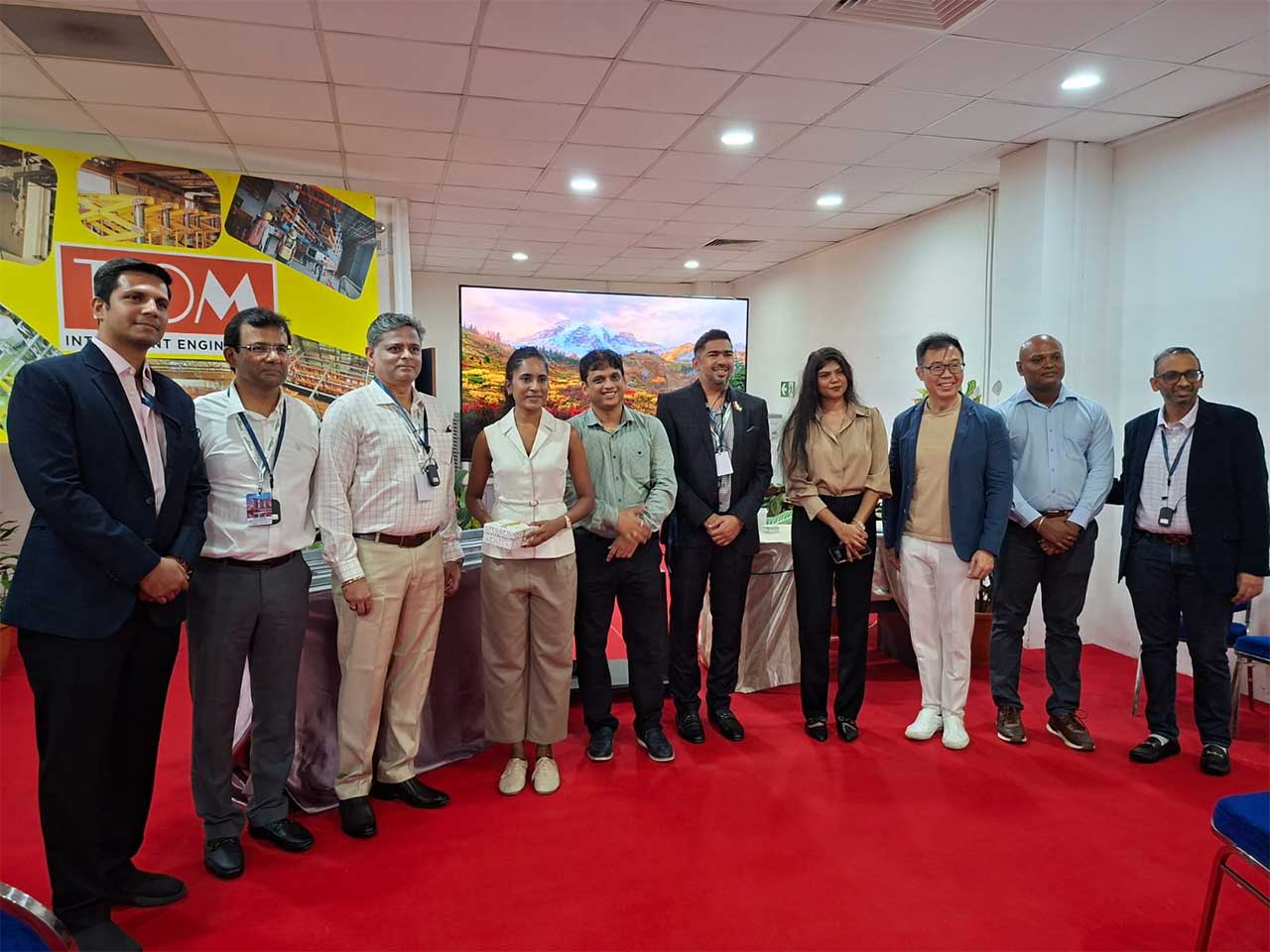
Building Construction Authority Start-ups
ConcreteAI. A Singapore startup providing AI-powered sensors for real-time, in-place concrete strength monitoring. Their technology speeds up construction, reduces costs and waste, and ensures better quality by replacing slow and labor-intensive cube testing with live data on site.concreteai
Ailityics. Ailityics uses artificial intelligence and computer vision to enhance construction site safety. Their system uses cameras to monitor PPE use, unsafe behavior, or restricted zone entry in real time, sending alerts and helping reduce accidents.
Podium. Podium is a cloud-based platform that automates and optimizes building design and feasibility studies for real estate projects. It quickly generates multiple options, analyzes cost, carbon, and risk, and speeds up planning and development decisions with digital collaboration tools.
Wavescan. Wavescan is a deep-tech startup from Singapore specializing in AI-powered, contactless 3D imaging scanners for non-destructive testing (NDT). Their technology allows building and infrastructure owners to detect hidden defects—such as cracks or leaks—inside walls, facades, or embedded structural elements without the need for demolition. This enables safer, faster, and more predictive maintenance and quality assurance across the construction sector.
viAct. viAct provides an AI-driven video analytics platform tailored for construction site safety, compliance, and workflow monitoring. Using scenario-based artificial intelligence, viAct analyzes live CCTV footage to detect unsafe behaviors, PPE violations, or accidents. The system automatically sends alerts and compiles safety data, helping contractors reduce workplace accidents and improve operational transparency.
Ackcio. Ackcio offers robust wireless monitoring systems designed for large and complex construction or infrastructure projects. Their solutions allow for real-time data acquisition from dozens of geotechnical and structural sensors, enabling remote monitoring and early-warning risk management for foundations, tunnels, high-rises, and other mission-critical structures. Ackcio’s long-range, mesh-networked devices are especially valuable on sites where cabling is impractical or safety is paramount.
Conclusion & Reflections.
Throughout the tour, the delegation gained powerful insights into sustainable construction, digital urban management, luxury and affordable housing innovation, and the strategic role of master planning and landscape in the urban experience. Key learnings expected to drive CREDAI Pune’s next phase of growth include :
- Scalable adoption of industrialized construction (PPVC), digital twin modeling, and vertical greening.
- Blending public, private, and community amenities for holistic, livable developments.
- Deep integration of sustainability—from material innovation and net-zero targets to human-centric design for all age groups.
- Harnessing data, AI, and technology to optimize safety, efficiency, comfort, and sustainability in Indian real estate.
Organized by the CIBF committee, this impactful educational experience was made possible through the passionate leadership and coordination of Nitin Nyati (Chairman), Hiren Parmar, Ketan Ruikar, Punit Oswal, Ishaan Magar, Vishal Jumani, and Monish Agarwal, with unwavering support from Credai Pune Metro.
The Singapore study tour’s legacy will be seen in the next generation of Indian developments—bolder, greener, smarter, and more inclusive for the communities they serve.
Gallery